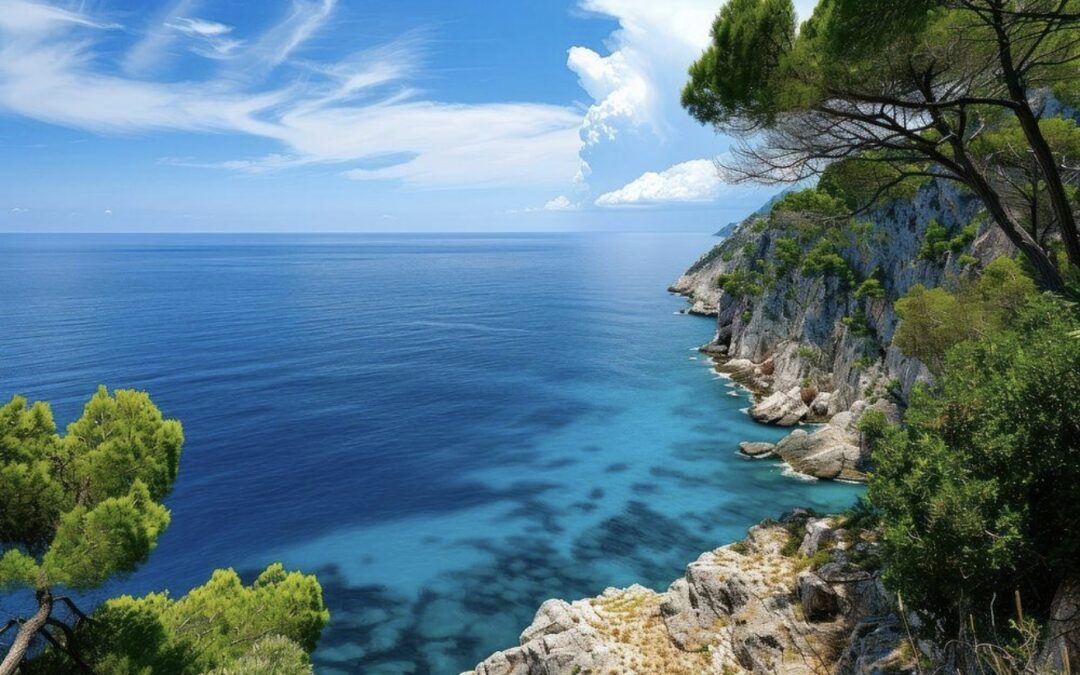
Climate change is no longer an issue concerning only scientists or future generations. Its effects are increasingly visible: rising temperatures, drought, water scarcity, wildfires, changes in ecosystems and growing pressure on our seas.
The Mediterranean is one of the regions where these changes take on particular significance. It is a sea that connects Europe, Africa and the Middle East, bringing together different peoples, religions and cultures that have lived along its shores for centuries.
Protecting it means protecting part of our common home.
For Muslims, protecting the environment is not separate from our spiritual responsibility. The Qur’an repeatedly reminds human beings of their responsibility towards the Earth and warns against spreading corruption and disorder upon it:
وَلَا تُفْسِدُوا فِي الْأَرْضِ بَعْدَ إِصْلَاحِهَا
“And do not cause corruption on the earth after it has been set right.”
(Qur’an 7:56)
The Arabic expression “baʿda iṣlāḥihā” (بَعْدَ إِصْلَاحِهَا) carries a meaning that cannot always be fully conveyed by a single word in another language. “Iṣlāḥ” refers to a state of goodness, order, soundness and rectification, and stands in contrast to “fasād”, which conveys corruption and disorder. The verse therefore reminds human beings not to bring corruption and disorder upon the Earth after it has been set right.
This teaching has particular relevance today when we consider humanity’s relationship with the environment and the resources of Creation.
Human beings benefit from water, land, animals, plants and the resources that God has placed within Creation, but this does not mean that we are entitled to use them without limits or responsibility.
Water itself holds a particularly important place in Islam. It is a source of life, an element of purification and a blessing that must not be wasted. The principle of moderation reminds us that having access to a resource does not give us the right to abuse it.
This responsibility, however, does not concern Muslims alone.
Believers of different religions and people who profess no religion share the same planet, breathe the same air and depend upon the same water. Protecting the environment can and should become common ground for cooperation among communities, institutions, science and civil society.
The European Muslims League believes that religious responsibility should also be reflected in concrete actions: avoiding waste, respecting water, protecting animals and ecosystems, educating younger generations and promoting a culture of moderation and responsibility.
We cannot ask future generations to pay the price for the choices we make today.
The Mediterranean offers us a particularly meaningful image. Its waters recognise neither religious nor political borders. What happens on one shore can have consequences for all the others.
The same principle should guide our response to climate change.
Protecting Creation should not divide us. It can unite us.
Muslims, Christians, Jews, followers of other religious traditions and those who profess no faith can all recognise a fundamental shared responsibility: to leave our children a planet on which it will still be possible to live with dignity and in peace.
Caring for Creation means recognising that what we have received does not belong to us alone.
The Earth has been entrusted to human responsibility. Protecting it means protecting life.
European Muslims League
PROTECTING CREATION: CLIMATE, WATER AND HUMAN RESPONSIBILITY