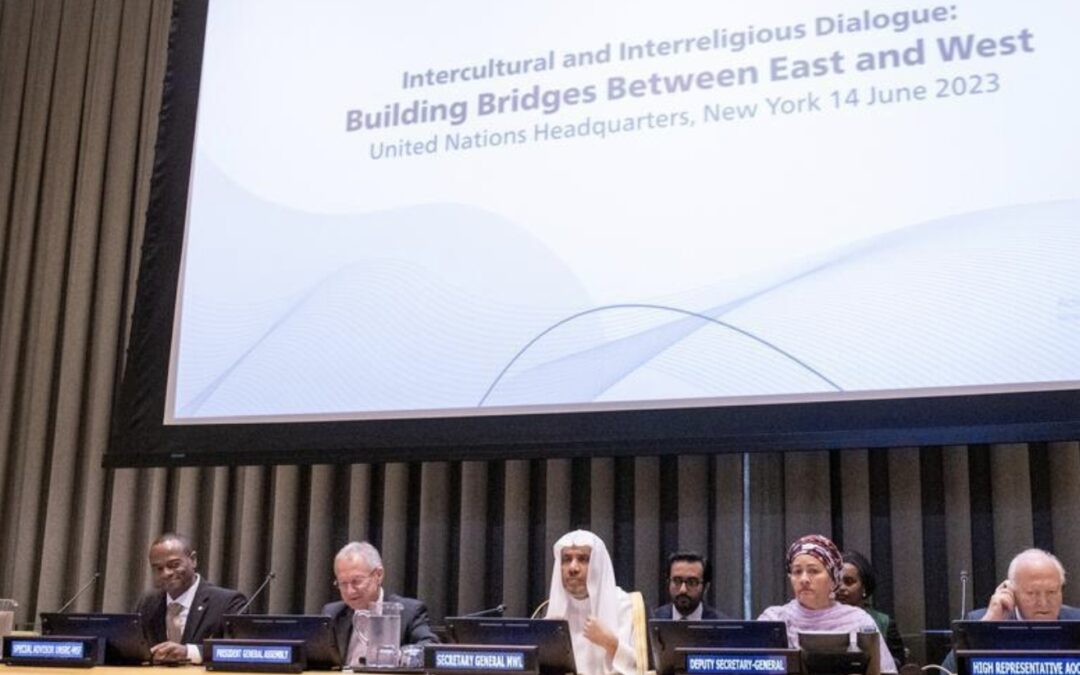
The European Muslims League highlights the importance of interfaith dialogue as world leaders gather at the United Nations
23 September 2026
As Heads of State and Government and high-level representatives gather in New York for the 81st session of the United Nations General Assembly, the European Muslims League (EML) draws attention to an essential dimension of peacebuilding: relations among people, cultures and religions.
In an international context marked by conflicts, humanitarian crises, polarization and growing mistrust, acting only after a crisis has erupted is not enough. It is necessary to address the conditions that can foster division and hostility.
Interfaith and intercultural dialogue therefore has a concrete role to play. Mosques, churches, synagogues and other faith communities can create opportunities for encounter and mutual understanding, contributing to social cohesion.
“As world leaders gather at the United Nations, we must remember that peace is not built only in the halls of diplomacy. It also begins in mosques, churches, synagogues, schools and our cities, whenever people of different faiths and cultures choose to know one another rather than fear one another,” said Alfredo Maiolese, President of the European Muslims League.
Religious communities do not replace political and diplomatic institutions, but they can complement their efforts by fostering social relations based on respect and shared responsibility.
Prejudice, discrimination, antisemitism, Islamophobia and religious hatred do not affect only the communities directly targeted; they weaken peaceful coexistence and can deepen divisions within society.
For the EML, it is therefore important to engage religious communities, civil society organizations, young people, schools, local institutions and the world of sport in building relationships capable of bridging cultural, religious and national differences.
“Preventing conflict also means preventing diversity from becoming division. As European Muslims, we have a responsibility to demonstrate through our actions that religious identity, citizenship and respect for other faiths can coexist. We do not ask others to abandon their identity; we ask that we meet one another in our diversity,” Maiolese added.
The United Nations General Assembly reminds us of the indispensable importance of dialogue among States. Alongside institutional diplomacy, however, there is also a daily responsibility within our societies: to build trust before differences turn into confrontation.
Peace does not begin when an agreement is signed. It begins much earlier: when we learn to recognize in others, even when they are different from us, a person with the same human dignity.
PEACE BEGINS BEFORE CONFLICT: THE ROLE OF RELIGIOUS COMMUNITIES IN REBUILDING TRUST